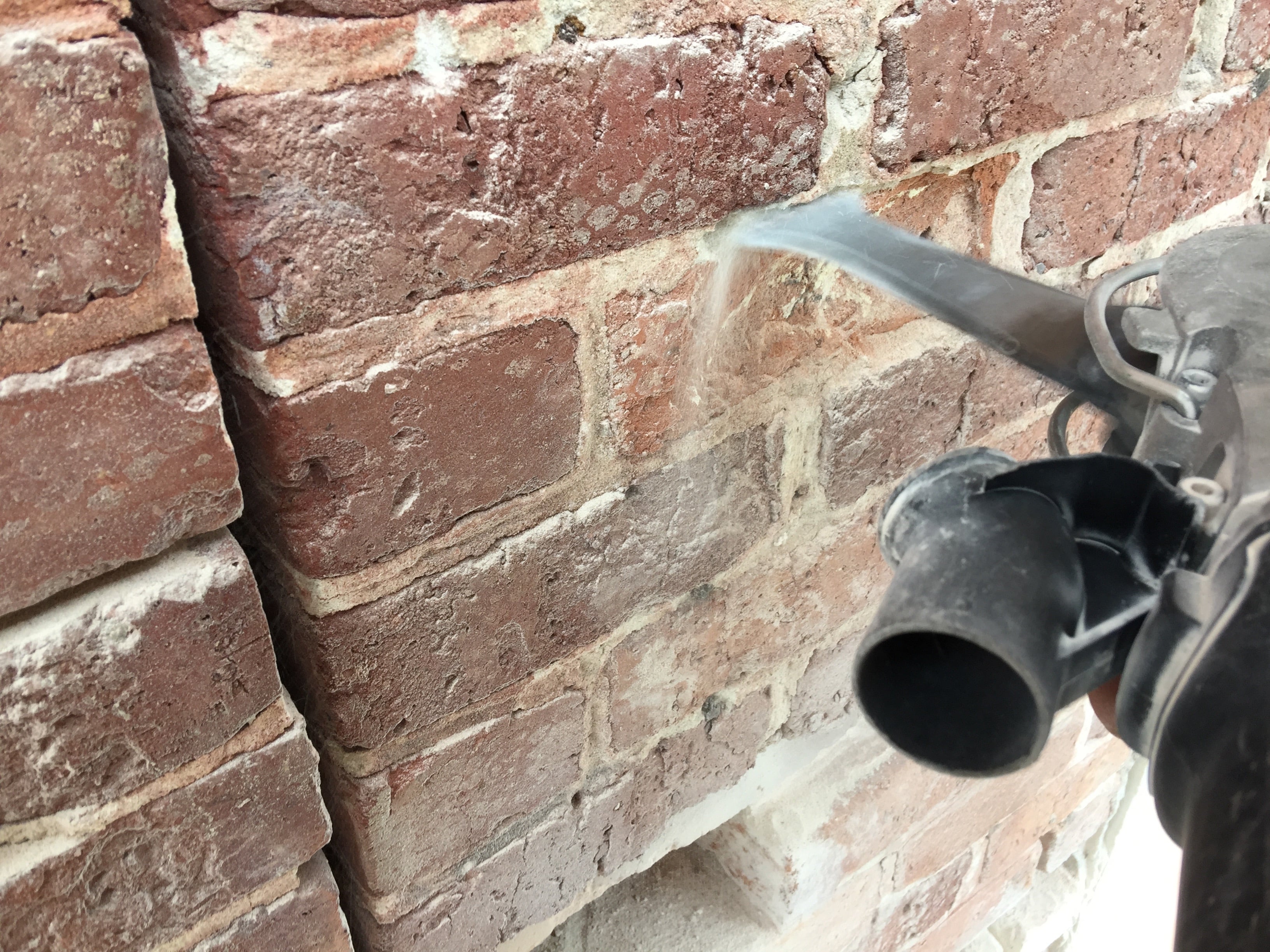
Lime Mortar Repointing
Many older buildings were built with lime mortar, and they generally work best when they are repointed with lime again. Lime is softer and more breathable than modern cement, which suits the way these buildings handle moisture and movement.
Lime mortar was the standard building mortar for centuries. It is more permeable than cement, so moisture can move through the joints and evaporate rather than being trapped in the wall. It is also more flexible, so it copes with the small movements older buildings make without cracking.
Older, softer bricks and stone are usually happier next to a softer mortar. When a hard modern mortar is used on this kind of masonry, moisture can be pushed to escape through the brick or stone faces instead of the joints, and over time that can contribute to spalling and erosion of the masonry itself.
This is why compatibility matters. The mortar needs to be compatible with the masonry and should not be unnecessarily hard or strong for the units around it. On traditional buildings with softer brick or stone it is generally intended to weather in preference to the masonry rather than the other way round. One lime mix does not suit every building. The right approach depends on the age of the property, how exposed it is and what the original mortar was like.
Where a natural hydraulic lime (NHL) is appropriate it can be used, and where a more traditional lime approach suits the building better that may be the better choice. Attention to mortar colour, the aggregate and the finish helps the repointing look right for the property rather than standing out.
Our Process
Assessment
We look at the existing mortar, the masonry and the exposure to work out what the building needs.
Mortar selection
We choose a lime approach and mix that suits the age, masonry and exposure of the building.
Careful raking out
Old mortar is removed carefully by hand where needed, protecting the arrises and faces of the masonry.
Preparation
Joints are cleaned out and dampened so the lime mortar bonds well and cures at the right rate.
Application
Lime mortar is worked into the joints in layers and finished to suit the building.
Curing and protection
Lime needs time and protection to cure. We protect fresh work from sun, wind and rain during this period.
Benefits
Frequently Asked Questions
Lime mortar is a traditional mortar made with lime rather than modern cement as the binder. It is softer, more breathable and more flexible than cement mortar, which suits many older buildings.
On older buildings a hard cement mortar can trap moisture and push it out through the softer bricks or stone, which can damage the masonry over time. A compatible lime mortar usually works with the building rather than against it.
No. Modern buildings are generally built to work with modern mortars. The point is to match the mortar to the building. We would not automatically strip sound cement pointing from a wall that was built for it.
That depends on the property, its masonry and how exposed it is. We assess this rather than applying the same mix everywhere, and we will explain what we recommend and why.
Request a Quote
Request a quote for Lime Mortar Repointing
Other Services
Related Guides
Planning repointing work?
Request a repointing survey and written quotation for your property.